跳至主要内容

Bow Shackle vs. Dee Shackle: Which One Should You Choose for Your Lifting Project?

When it comes to lifting, rigging, or lashing, picking the right connector isn’t about preference—it’s about safety and staying compliant. Bow shackles (often called anchor shackles) and dee shackles (chain shackles) may look alike at a glance, but they’re built for completely different loads. Grab the wrong one, and you risk gear fatigue, sudden failure, or an accident on site. Here’s a quick, no-nonsense breakdown of the key differences, so you can choose wisely and work safely.

What is a Bow Shackle?
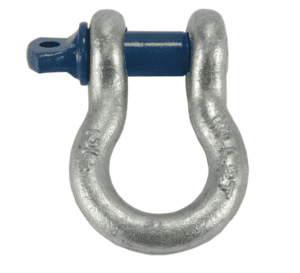
Bow shackle

    Key points:

    • Shape: Rounded (bow shape)
    • Also called: Anchor shackle
    • Features:
      • Larger curve
      • Handles multi-directional loads

    What is a Dee(D) Shackle?
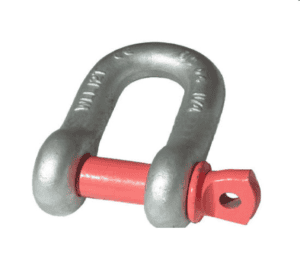
    Key points:

    • Shape: D-shaped (straight sides)
    • Also called: Chain shackle
    • Features:
      • Designed for straight-line loads
      • Higher stability in one direction

    Bow Shackle vs Dee Shackle: Key Differences

    FeatureBow Shackle (e.g., G209 / G2130)Dee Shackle (e.g., G210 / G2150)
    Loading DirectionCan handle multi-directional/side loading.Strictly for in-line (straight) loading.
    Connection CapacityLarge interior accommodates wide slings or multiple hooks.Narrow throat designed for single-line chain or wire rope.
    Side LoadingReduction in WLL applies, but it is permissible.Never use for side loading; risk of body twisting.
    Common UseOff-road recovery, cranes, multi-leg slings.Industrial towing, permanent chain links, and tensioning.

    How to Choose the Right Shackle?

    When to Use a Bow Shackle

    Choose a bow shackle when:

    • You are using multi-leg slings
    • Load direction may shift or vary
    • You need to connect multiple components
    • You are working in offshore or dynamic environments

    Example:
    Lifting heavy equipment with a 2-leg or 4-leg chain sling.

    When to Use a Dee Shackle

    Choose a Dee shackle when:

    • The load is applied in a straight line
    • You need a secure, fixed connection
    • You are connecting chains or towing systems

    Example:
    Securing cargo with a direct pulling force or connecting chain assemblies.

    Common Mistakes to Avoid

    Even experienced users make critical errors when selecting shackles.

    Using a Dee Shackle for Side Loading

    Dee shackles are not designed for angled loads—this can cause bending or failure.

    Overloading Beyond WLL

    Ignoring the working load limit significantly increases the risk of accidents.

    Improper Pin Selection

    Using mismatched or loose pins can compromise the entire connection.

    Assuming All Shackles Are the Same

    Different standards (US, European) and grades affect performance and safety.

    Conclusion: Bow or Dee Shackle?

    Both bow shackles and Dee shackles play essential roles in lifting and rigging—but they are not interchangeable.

    • Choose a bow shackle for flexibility and multi-directional loads
    • Choose a Dee shackle for straight-line strength and stability

    评论

    此博客中的热门博文

    Australian Standard Webbing Slings & Round Slings |AS1353 & AS4497

      In the Australian market, lifting slings are essential tools in hoisting and material handling operations, and their safety and performance must comply with strict national standards. Australia’s lifting sling standards primarily include   AS 1353   and   AS 4497 , which apply to   webbing slings (flat slings)   and   roundslings , respectively. www.chinatoplifting.com tracy@chinatoplifting.com Overview of Applicable Standards Sling Type Standard Standard Title Webbing Sling AS 1353.1 / AS 1353.2 Flat synthetic webbing slings – Manufacture & Use Roundsling AS 4497.1 / AS 4497.2 Synthetic roundslings – Manufacture & Use Structure & Material Differences Webbing Slings Structure : Made from one or more layers of woven polyester webbing. Common designs include flat type, eye type, and reinforced eye type. Features : Lightweight and flexible Easy to store and fold Wide contact area to avoid damage to loads Compatible with corner protectors for...

    A comprehensive guide to hand hydraulic pallet trucks

      In the world of modern logistics and warehousing, the   Hand Pallet Truck —also known as a manual pallet jack—is one of the most widely used and essential tools for material handling. Known for its simplicity, reliability, and cost-effectiveness, it plays a vital role in short-distance transportation across warehouses, factories, supermarkets, and more. What is a hand pallet truck? A  hand pallet truck  is a manually operated tool used to lift and move palletized loads. It typically consists of: Handle  – for steering and controlling the hydraulic pump. Hydraulic pump  – activated by pressing the handle up and down to raise or lower the forks. Fork arms  – slide into the base of a pallet and support the load. Wheels  – front and rear wheels made of materials like nylon, PU, or rubber, depending on the environment. Common Application Scenarios Due to its easy operation and versatility, the hand pallet truck is widely used in: Warehouses and stora...

    Common Stitching Defects in Lifting Slings and How to Spot Them

      When it comes to  lifting slings , most buyers focus on the webbing material, the label, or the load capacity. However, one often-overlooked yet   critical component   is the   stitching . The stitching—specifically the sewing thread and pattern—plays a key role in the overall strength and durability of the sling. Why Stitching Matters in Lifting Slings The strength of a lifting sling doesn’t come from the webbing alone—it relies heavily on the quality of stitching that holds everything together. Poor stitching can significantly reduce the Working Load Limit (WLL) and may lead to dangerous failures during lifting operations. The stitching on a webbing sling isn’t just about holding layers together—it’s what keeps the sling strong and safe under load. If the stitching is poorly done, the entire sling becomes unreliable. Here’s what can go wrong: Lower Strength  – Weak stitching reduces the sling’s working load limit (WLL), meaning it might fail when you le...